
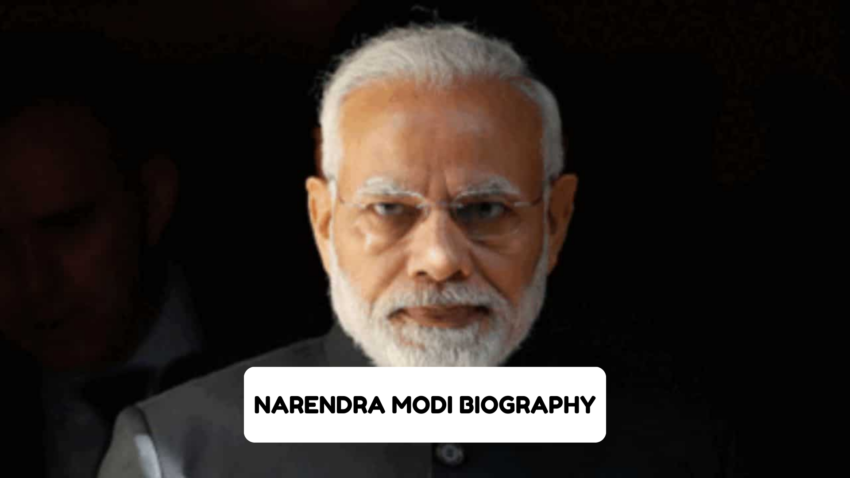
The story of Narendra Modi is one of the most remarkable political journeys in modern India. Rising from humble beginnings to become the Prime Minister of the world’s largest democracy, Modi’s life has inspired millions.
Known for his powerful oratory, strong leadership, and ambitious reforms, Narendra Modi has played a transformative role in shaping 21st-century India.
Early Life and Background
Narendra Damodardas Modi was born on September 17, 1950, in Vadnagar, Gujarat, India. He grew up in a modest family. His father, Damodardas Modi, ran a tea stall at a railway station, and young Narendra helped him sell tea.
Growing up in Gujarat deeply influenced his personality. From an early age, Modi displayed strong leadership skills, discipline, and a deep interest in public service.
He completed his schooling in Vadnagar and later earned a Bachelor’s degree in Political Science. Modi eventually obtained a Master’s degree in Political Science from Gujarat University.
Entry into RSS and Early Political Journey
In his youth, Modi joined the Rashtriya Swayamsevak Sangh (RSS), a Hindu nationalist volunteer organization. His association with the RSS shaped his ideological foundation and political discipline.
Later, he became actively involved with the Bharatiya Janata Party (BJP), which emerged as a major political force in India during the 1980s and 1990s.
Modi’s organizational skills quickly brought him recognition within the party. He played a key role in expanding BJP’s presence in Gujarat and other states.
Rise as Chief Minister of Gujarat (2001–2014)
In 2001, Narendra Modi was appointed Chief Minister of Gujarat. His tenure marked a turning point in his political career.
Economic Development
Under his leadership, Gujarat experienced rapid industrial growth. The “Vibrant Gujarat” investor summits attracted global investments, positioning the state as an economic powerhouse.
Infrastructure and Governance
Modi focused heavily on:
- Road development
- Electricity supply
- Industrial corridors
- Agricultural reforms
His governance model, often called the “Gujarat Model,” emphasized efficiency and business-friendly policies.
2002 Gujarat Riots
One of the most controversial events during his tenure was the 2002 Gujarat riots. Critics accused his administration of mishandling the situation, while investigations and court rulings later found insufficient evidence to prosecute him. The incident remains a significant part of discussions about his political legacy.
Becoming Prime Minister of India (2014)
In 2014, Narendra Modi led the BJP to a historic electoral victory in the Indian general elections. He became the 14th Prime Minister of India, succeeding Manmohan Singh.
His campaign slogan “Achhe Din” (Good Days) resonated strongly with voters. Modi promised economic reforms, anti-corruption measures, and development-driven governance.
He was re-elected in 2019 with an even larger mandate, strengthening his political dominance.
Major Policies and Reforms
1. Make in India
Launched to boost manufacturing and attract foreign investment, the Make in India initiative aimed to transform India into a global manufacturing hub.
2. Digital India
The Digital India campaign sought to expand internet connectivity, promote digital payments, and modernize governance.
3. Swachh Bharat Abhiyan
The Swachh Bharat (Clean India) Mission focused on sanitation, toilet construction, and cleanliness awareness across India.
4. Demonetization (2016)
In November 2016, Modi announced the demonetization of ₹500 and ₹1000 notes to curb black money and counterfeit currency. The move sparked nationwide debate.
5. Goods and Services Tax (GST)
The introduction of GST unified India’s complex tax structure into a single indirect tax system.
Foreign Policy and Global Influence
Narendra Modi has actively reshaped India’s foreign policy. He strengthened relations with major global powers including:
- The United States
- Japan
- Australia
- European Union nations
India’s leadership during global events such as the G20 Summit has enhanced its international profile.
Modi is known for his strong diplomatic presence and frequent international visits, positioning India as a major global player.
Awards and Recognition
Over the years, Modi has received numerous awards and honors from various countries for his contributions to international diplomacy and governance.
Personal Life
Narendra Modi maintains a disciplined lifestyle. He is known for his early morning routine, yoga practice, and vegetarian diet. Though married in his youth to Jashodaben, he has largely remained focused on public service.
He is also an author and has written books reflecting his thoughts and experiences.
Controversies
Like many global leaders, Modi’s career has not been without controversy. Issues such as:
- The Gujarat riots
- Demonetization impact
- Citizenship Amendment Act (CAA)
- Farmers’ protests
have drawn both domestic and international scrutiny.
Frequently Asked Questions
1. When was Narendra Modi born?
Narendra Modi was born on September 17, 1950.
2. Which political party does Narendra Modi belong to?
He belongs to the Bharatiya Janata Party (BJP).
3. When did Narendra Modi become Prime Minister?
He became Prime Minister in 2014 and was re-elected in 2019.
4. What is Narendra Modi known for?
He is known for economic reforms, strong leadership, and initiatives like Digital India and Swachh Bharat.
5. Was Narendra Modi ever a Chief Minister?
Yes, he served as Chief Minister of Gujarat from 2001 to 2014.
Conclusion
The Narendra Modi biography is a compelling account of ambition, resilience, and political transformation. From humble beginnings in Gujarat to becoming one of the most powerful leaders in the world, Modi’s journey continues to shape India’s destiny.
Whether admired or criticized, Narendra Modi remains a central figure in modern global politics. His policies, leadership style, and vision for India will continue to influence the country for decades to come.